Refs and Elites
Enter our prediction competition ahead of the Women’s & Men’s Varsity football matches at the Cledara Abbey Stadium on Friday 21 March 2025

Make 3 predictions on the Women’s and Men’s Varsity matches

Win 10star merch if your predictions are correct – or the closest of all entries

Enter here before KO at 16:00, Fri 21 Mar – full T&Cs are on this page
The 10star Summer Intern Program is designed to introduce undergraduate and graduate students to how we apply data science and quantitative modelling within the sports betting industry.
Through this program, interns will have the opportunity to work on real projects, collaborate with experienced professionals, and gain insights into the workings of a constantly evolving and fast paced industry.

Timeframe
- June - September 2025

Location
- Hybrid working, with regular onsite sessions at our offices in Camden, London

Eligibility
- Strong academic performance in a Mathematical discipline
- Experience using a coding language such as R, Python, C#, VBA
- Ability to work independently and in a team environment
- Interested in sports and thinking about them in an analytical way

Application Process (now closed)
- Interested candidates should submit their resume and a cover letter outlining their interest in the internship program to careers@10star.com with the subject line "Summer Intern Program Application"
- Closing date for applications 30 April 2025
- Shortlisted candidates will be contacted for interviews

Benefits
- Professional Development
Work closely with experienced professionals and participate in learning sessions tailored to enhance your skills - Networking Opportunities
Connect with professionals across various departments and build relationships that could benefit your career in the future - Hands-on Experience
Engage in meaningful projects and tasks that contribute to the company's goals - Remuneration
Competitive salary offered for the duration of the internship - Flexibility
Work around your term dates, study requirements and holidays
Are referees biased?
You will have heard the accusation that officials favour elite teams. Is it true?
Are there fouls that will be a penalty for a big team but not for a small team? Are there fouls that will be a red card for a small team but not for a big team? At the end of a match do referees add more time if a rich team rather than a poor team are losing? Or are these all myths? We will try to answer the questions by comparing the decisions teams get with the decisions they should get.
Let us start by listing the teams we will call elite. There might have been some disagreement about others but we do not think there will be any disagreement about these. Arsenal, Chelsea, Liverpool, Manchester City, Manchester United and Tottenham – the Big Six – in England. Barcelona and Real Madrid in Spain. Inter, Juventus and Milan in Italy. Bayern Munich in Germany, Paris Saint-Germain in France. If referees favour any teams they will favour these teams.
Penalties
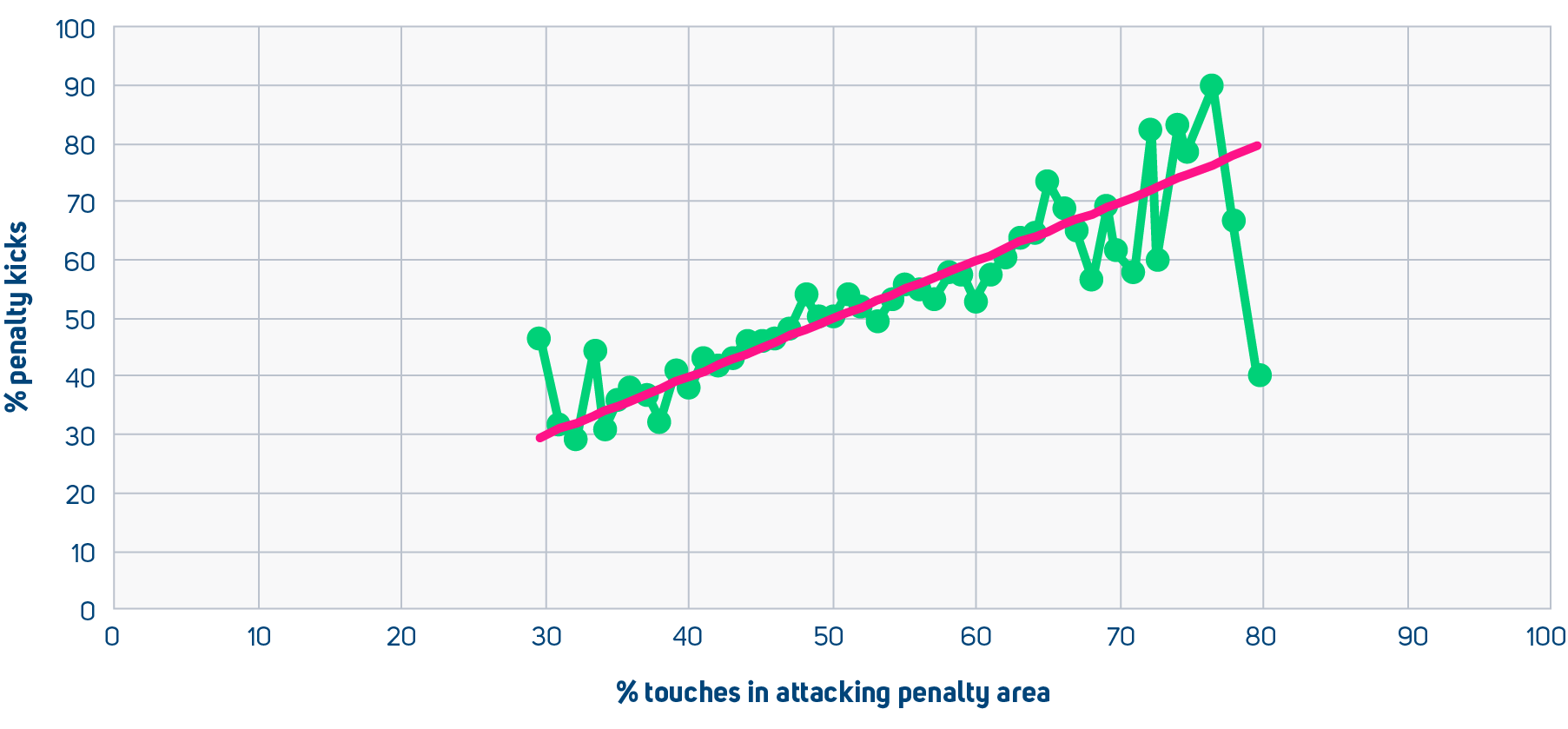
How many spot-kicks should teams get? An attacker can win a penalty without being in the penalty area. A shot from outside can be handled by a defender inside, for example. Usually, though, an attacker will be inside the penalty area with the ball when the foul is committed. There is a relationship for most sorts of teams between touches in the penalty area and penalty kicks. More of one tends to lead to more of the other.
As you will see on our first graph. It was compiled with data from eight seasons of the Big Five leagues – 2017-18 to 2024-25 in the English Premier League, Spanish La Liga, Italian Serie A, German Bundesliga and French Ligue 1.
We plotted percentage of touches in the attacking penalty area against percentage of penalty kicks. Whenever we refer to the percentage of something, here or later, we will be expressing the numbers for teams as a proportion of the totals in their games.
The green line on the graph is real data. The pink line is what it would have looked like if touches in the attacking penalty area corresponded exactly with penalty kicks – if teams who took 50 per cent of touches in the attacking penalty area took 50 per cent of penalty kicks, and so on. You will see that they corresponded pretty closely. The green line for the most part wriggles around the pink line.
Touches in attacking penalty area & penalty kicks - big five leagues 2017/18 - 2024/25
Did fashionable teams receive favourable treatment?
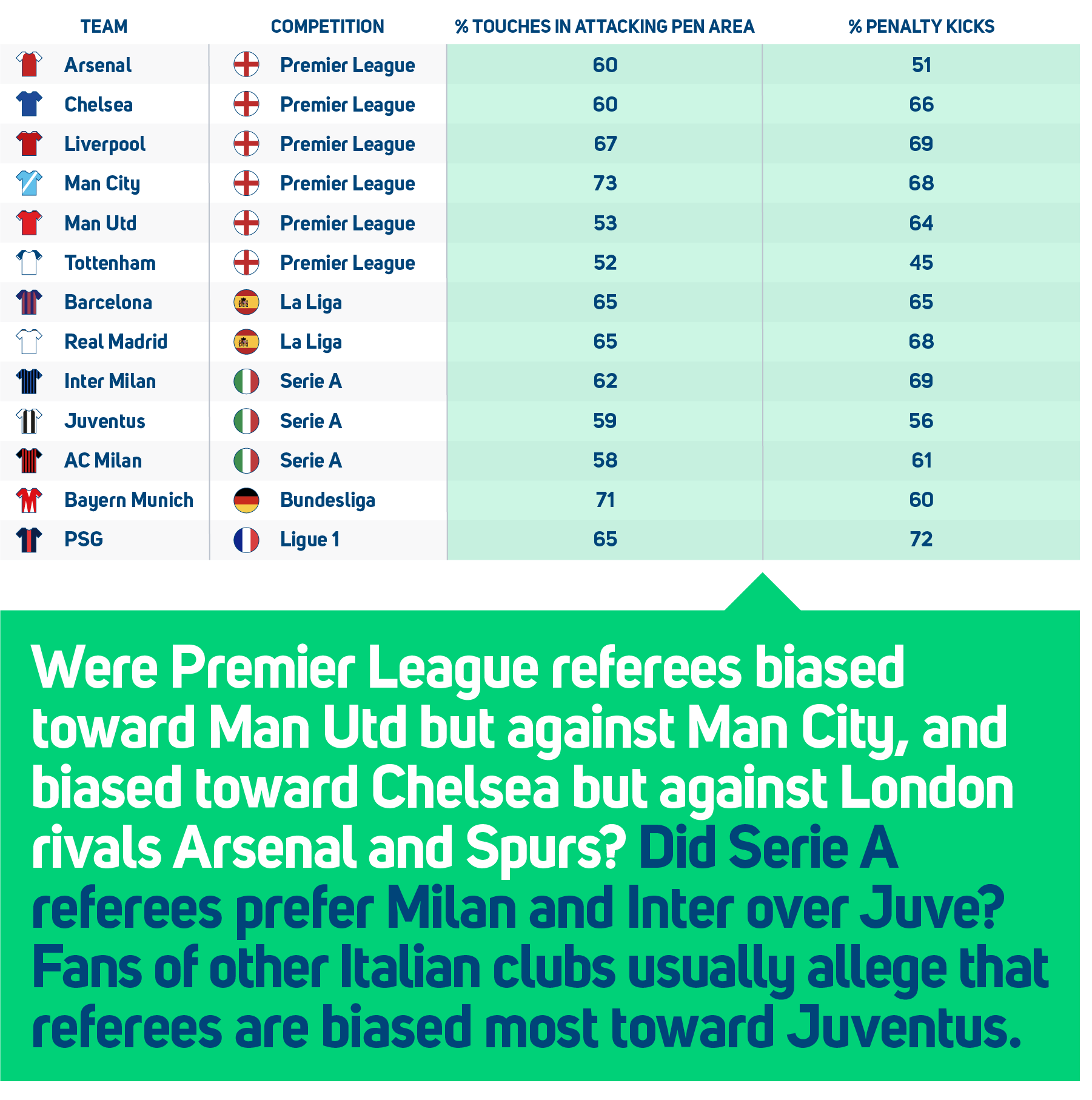
Elite teams in England took 61% of touches in the attacking penalty area and 61% of penalty kicks. Elite teams on mainland Europe took 64% of touches in the attacking penalty area and 65% of penalty kicks. There is next to no evidence here to suggest that elite teams collectively receive more than their fair share of penalties. Individually some did but others did not, as you can see in the table below.
Touches in attacking penalty area & penalty kicks - elite teams 2017/18 - 2024/25
Red cards
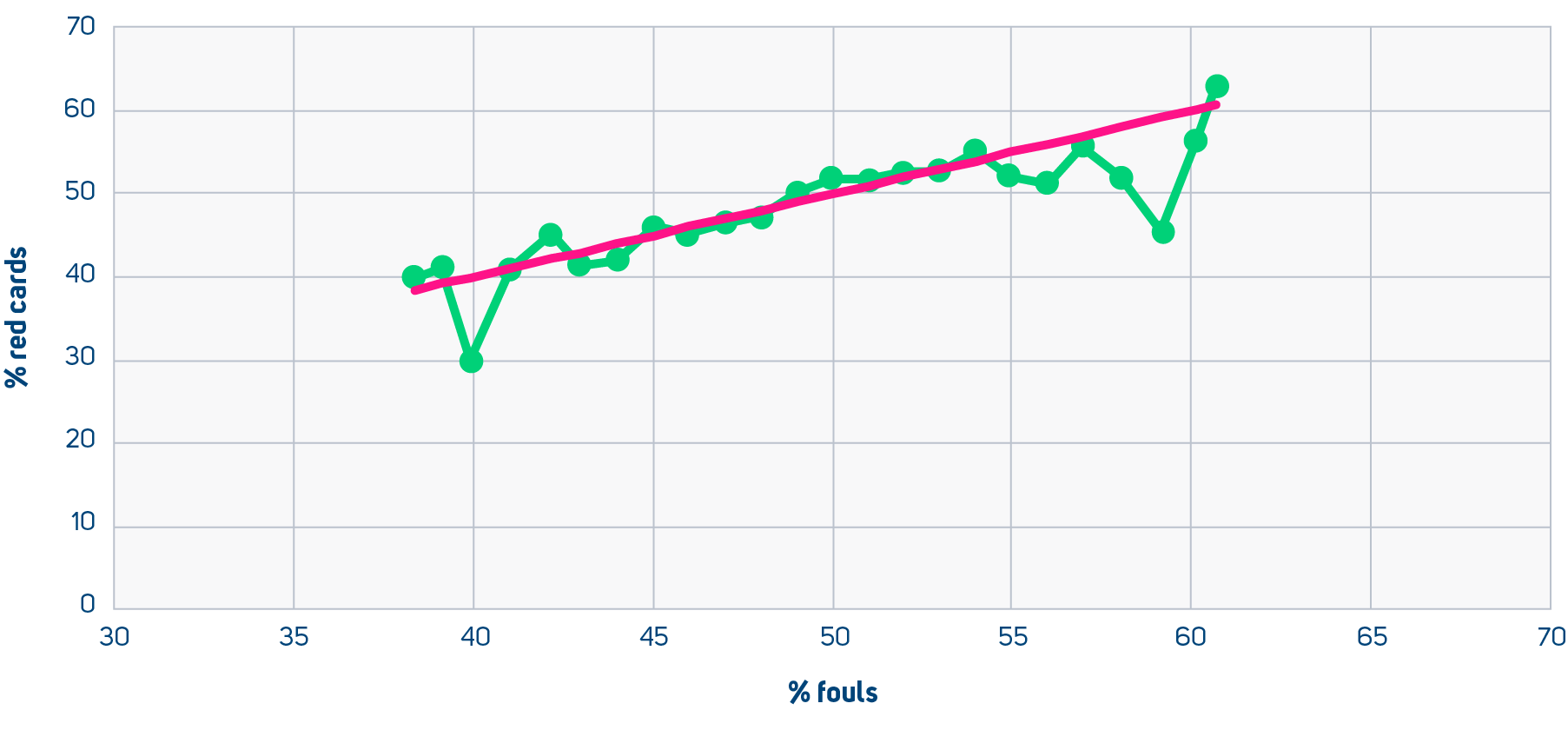
Why are players sent off? For some offences in and out of the penalty area. Just as there is a relationship between touches in the attacking penalty area and penalty kicks so there is a relationship between fouls and red cards.
It is illustrated on the next graph, which covers 19 seasons in the Big Five leagues – 2006/07 to 2024/25. The relationship between fouls and red cards is a bit looser than the relationship between touches in the attacking penalty area and penalty kicks. On this graph the green line is not entwined quite so tightly round the pink line.
Fouls & red cards - big five leagues 2006/07 - 2024/25
Did prominent teams get preferential treatment?
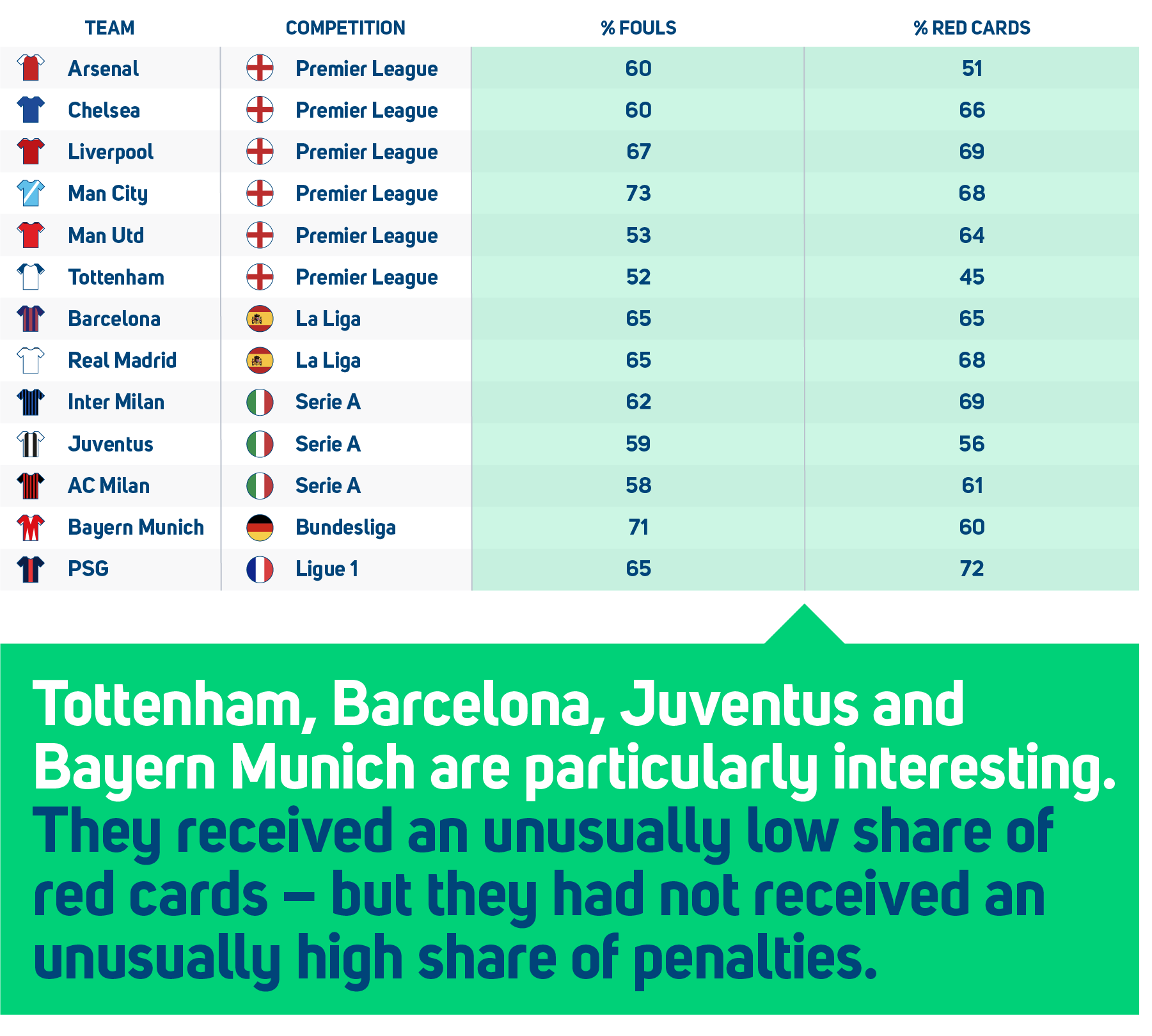
Elite teams in England committed 49% of the fouls in their games and received 47% of the red cards. Elite teams on mainland Europe committed 47% of the fouls in their games and received 45% of the red cards. There is slightly more divergence here between the action and its possible consequence.
The next table shows which elite teams account for it. Barcelona, Bayern Munich, Juventus and Tottenham are particularly interesting. They received an unusually low share of red cards – but they had not received an unusually high share of penalties.
Fouls & red cards - elite teams 2006/07 - 2024/25
Added time
Do referees allow more stoppage time if a fashionable team are losing?
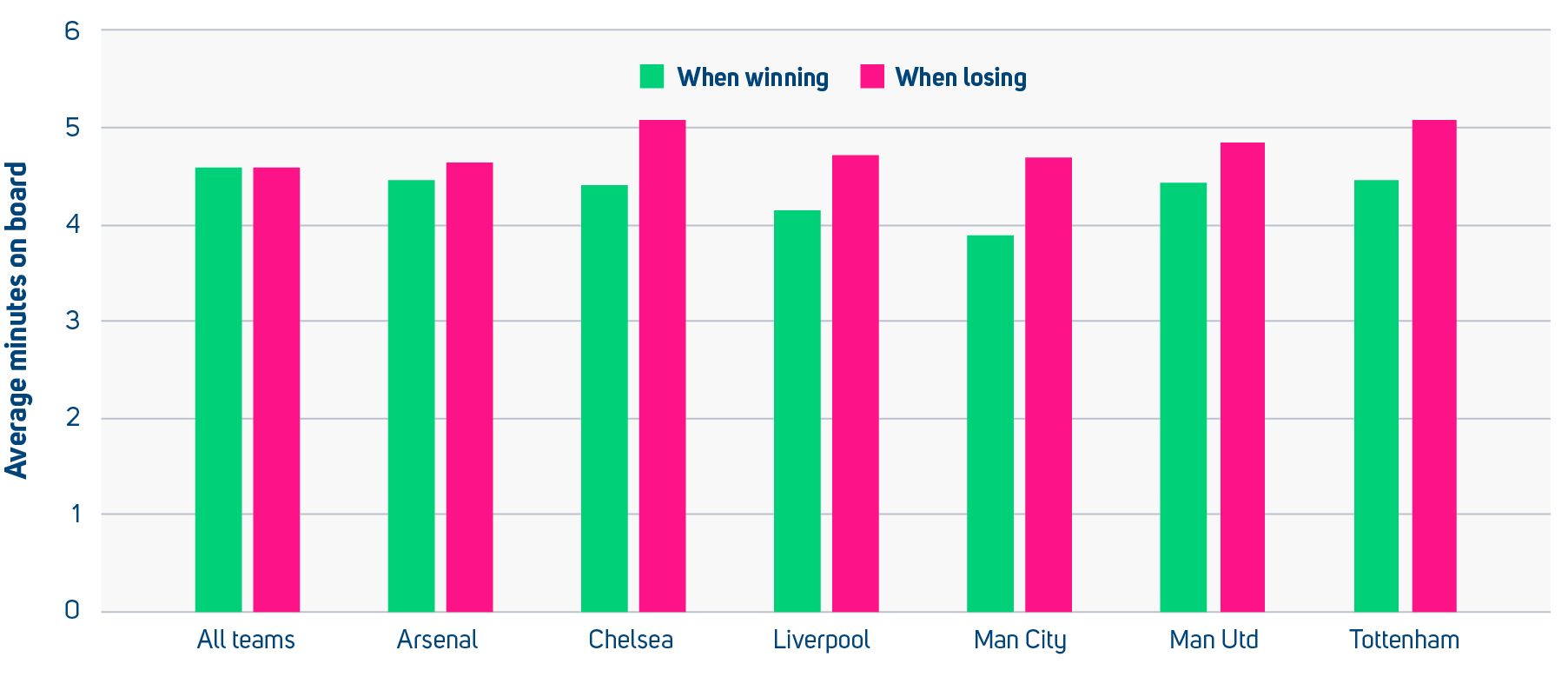
In the Premier League in the nine seasons from 2016/17 to 2024/25 the average number of minutes displayed on the fourth official’s board at the end of the second half if scores were not level was 4.6. On the graph below you will see that for each member of the Big Six more time was added if they were losing and less if they were winning. The average difference was just over half a minute.
Second half added time - Premier League 2016/17 - 2024/25
A similar disparity occurred in the Champions League. Our final graph shows second half stoppage time played – not indicated on the board – in Champions League games in the 18 seasons from 2007/08 to 2024/25. The average length when scores were not level was three minutes and 46 seconds. For almost all elite teams it was higher when they were losing and lower when they were winning. Among the few exceptions were Tottenham, who are less of an elite force elsewhere in Europe than in England. The average difference was 43 seconds.
Second half added time - Champions League 2007/08 - 2024/25
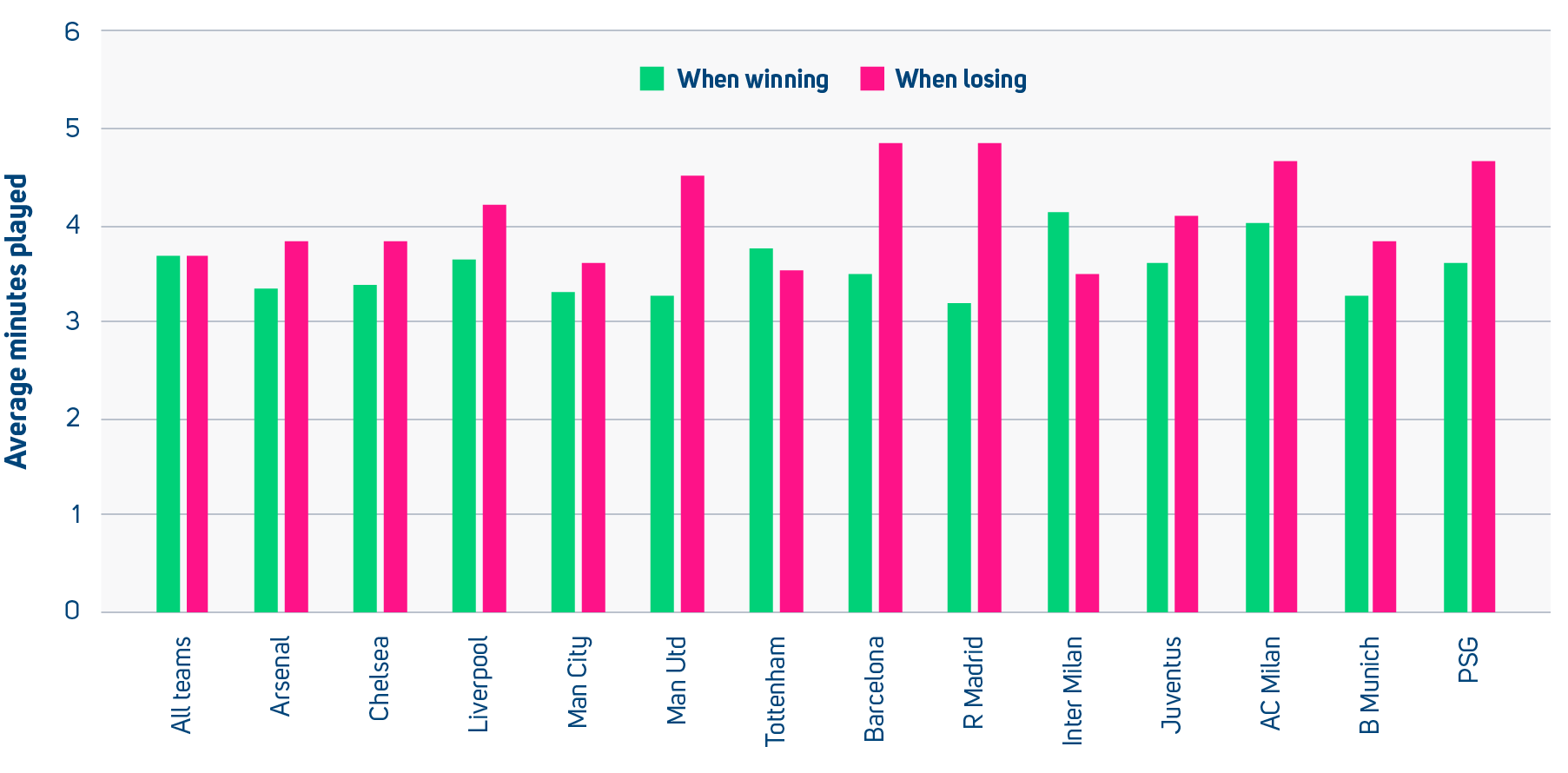
However, ball-in-play data suggests that referees should add more time when the biggest and best are losing – at least as much as they do. In all probability a big underdog will waste more team if leading a powerhouse than the powerhouse would waste when leading the underdog.
There is clear evidence that referees add more time when elite teams are losing, but also an explanation that does not involve favouritism. There is little evidence that referees are biased toward all elite teams when showing red cards and next to none when awarding penalties. A more granular inspection of the data, such as pre-match expectations, playing home or away - whether verdicts vary with venues - or even weather conditions, reveals additional insights and raises further interesting questions. We will, however, leave those for another day.
Sportsbooks need accurate information on the likelihood of penalties and red cards, which can change the course of a game. As each half develops they also need a reliable indication of how much time might be added. Our 10star partners benefit in many other ways as well from our pricing strength and modelling expertise. Our automated risk management systems ensure risk is managed in accordance with business-specific risk profiles, and our unique customer sharpness algorithms react in real time to sharp money. It is why our partners can always trade with confidence.
Published 09 December 2025
For all enquiries contact info@10star.com